
Preparing for GATE Aerospace is a long-term commitment that demands clarity, discipline, and strategic execution. It is not about short bursts of motivation or last-minute intensity, it is about building a system that works for you every single day.
For GATE Aerospace 2027 aspirants, preparation must begin with a clear direction. A structured approach, consistent revision, and focused problem-solving are what separate serious candidates from the rest.
Here is a practical roadmap designed to help you prepare with purpose and confidence.
List Of GATE Aerospace Engineering Preparation Tips
1. Understand the Exam Before You Touch the Books
Preparing for GATE Aerospace is not about studying randomly or relying on motivation.
It is about building structure, clarity, and consistency over a long period.
If you are serious about GATE Aerospace 2027, your preparation must be planned — not emotional, not rushed, and not scattered.
Below is a practical, structured approach that serious aspirants should follow.
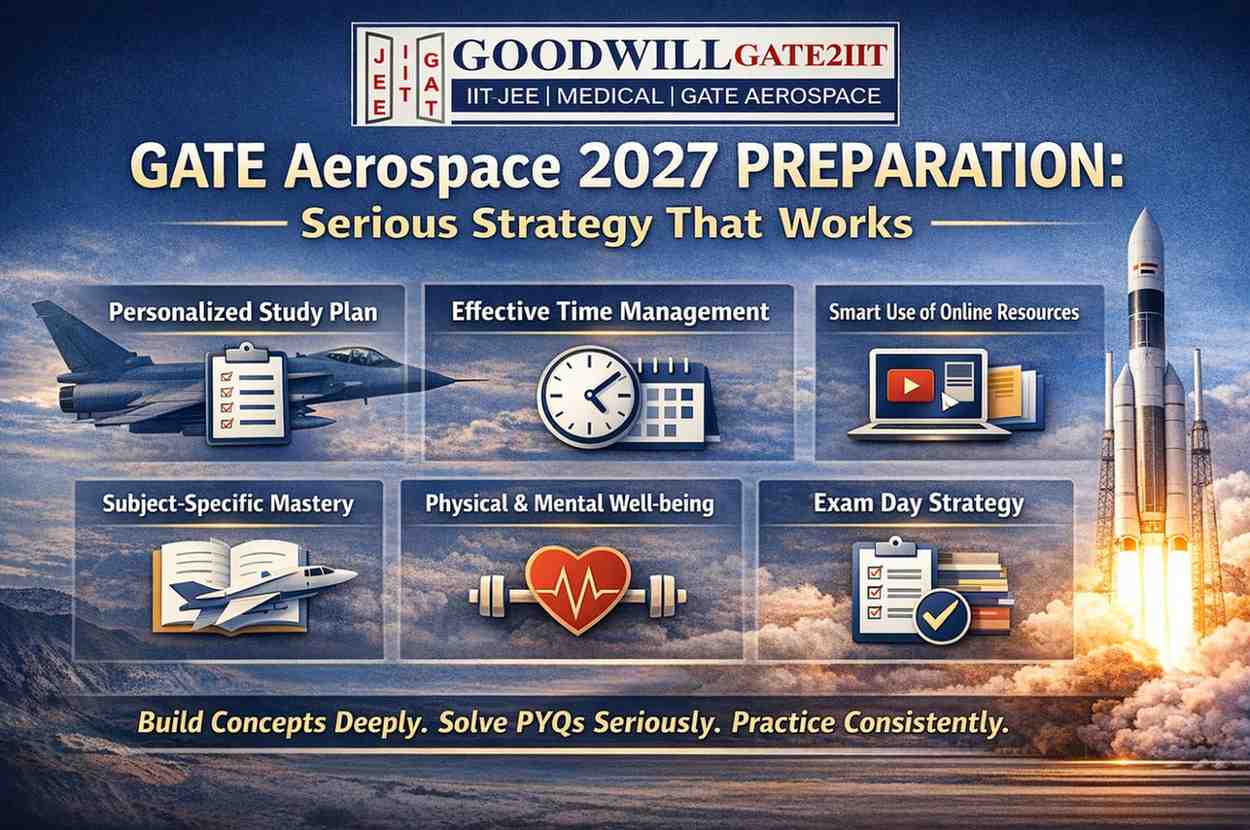
1. Build a Personalized Study Plan (Not a Generic Timetable)
Every serious preparation begins with planning.
Start by:
- Understanding the complete GATE Aerospace syllabus.
- Identifying subject-wise weightage.
- Evaluating your strengths and weak areas honestly.
Instead of copying someone else’s timetable:
- Break your syllabus into monthly targets.
- Study 2 subjects in parallel (preferably 1 core + Mathematics).
- Keep weekly revision slots.
- Track your progress at the end of every week.
Your plan should be realistic enough to follow consistently — not impressive enough to post.
Also remember:
Plans are not permanent.
If something is not working, adjust it early.
2. Master Time Management (Because Syllabus Is Finite, Time Is Not)
Time management is not about studying all day.
It is about focused and disciplined study.
Effective approach:
- Fix daily study hours (quality over quantity).
- Study in focused blocks of 1–2 hours.
- Avoid multitasking.
- Keep short breaks to prevent burnout.
- Study difficult subjects during your peak concentration hours.
Also learn to reduce distractions.
Preparation requires selective sacrifice.
At the end of each week, review:
- What was planned?
- What was completed?
- Where did time leak?
Improvement in time discipline directly improves rank potential.
3. Use Online Resources Strategically
Online resources are powerful — but only when used selectively.
For effective preparation:
- Follow one structured lecture source.
- Use standard textbooks for conceptual clarity.
- Practice through a reliable test platform.
- Join discussion forums only for genuine doubt resolution.
Avoid resource hopping.
Switching between multiple teachers and materials reduces depth.
Mock tests should not be attempted randomly.
They should be taken seriously and analyzed thoroughly.
Online preparation works only when it is structured.
4. Subject-Specific Preparation Strategy
Each subject in Aerospace demands a slightly different approach.
Core Subjects
(Aerodynamics, Flight Mechanics, Propulsion, Structures, Space Mechanics)
- Focus on conceptual clarity and derivations.
- Solve standard textbook problems.
- Practice numerical questions consistently.
- Connect theory with problem-solving.
Engineering Mathematics
- Practice daily.
- Improve speed and accuracy.
- Revise formulas regularly.
- Focus on weak topics early.
General Aptitude
- Do not ignore it.
- Regular small practice sessions are enough.
- It can significantly improve your overall score.
Most importantly:
- Solve Previous Year Questions topic-wise.
- Maintain a mistake notebook.
- Revisit weak topics multiple times.
Success in Aerospace comes from depth, not superficial coverage.
5. Maintain Physical and Mental Stability
Long preparation requires mental endurance.
To sustain performance:
- Take short study breaks.
- Sleep adequately.
- Maintain basic physical activity.
- Avoid unnecessary comparison with others.
Burnout reduces retention.
Consistency requires energy management.
A calm and balanced mind performs better in numerically intensive exams like GATE Aerospace.
6. Exam Day Strategy
Preparation is incomplete without execution strategy.
Before exam day:
- Sleep properly.
- Avoid new topics.
- Revise short notes and formulas.
During exam:
- Read instructions carefully.
- Attempt comfortable questions first.
- Manage time section-wise.
- Avoid getting stuck on a single question.
- Keep last few minutes for review.
Confidence on exam day comes from preparation discipline, not last-minute effort.
Final Perspective
GATE Aerospace 2027 will reward:
- Structured preparation
- Conceptual clarity
- PYQ mastery
- Consistent revision
- Calm execution
It will not reward random hard work.
If you prepare with direction and analyze your progress honestly, rank becomes a result — not a surprise.an opportunity for learning and development. Regardless of the results, celebrate the completion of this significant milestone and look forward to the myriad opportunities that lie ahead, enriched by the knowledge and experiences gained during your GATE Aerospace journey.